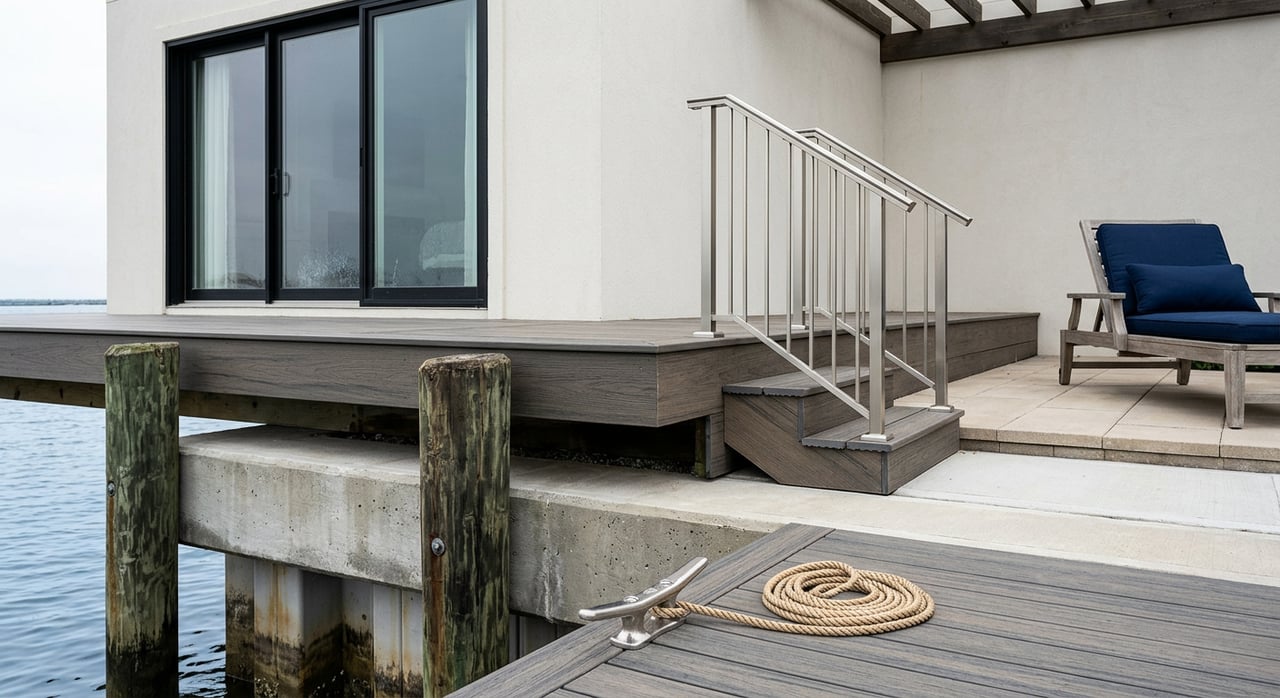
Selling A Taylor Lake Village Waterfront Home
March 24, 2026
March 24, 2026
Thinking about selling your Taylor Lake Village waterfront home but not sure where to start? You are not alone. Waterfront listings come with unique steps that regular suburban homes do not, from dock permits to flood maps and windstorm coverage. In this guide, you will learn what to check, how to prepare, and the best ways to price and market your shoreline property so you can sell with confidence. Let’s dive in.
A buyer is not just purchasing a home. They are buying water access, a dock or lift, shoreline protection, and a lifestyle. That makes documentation, inspections, and visuals more important. Small details like usable water depth or a recently serviced boat lift can shape value and time on market. When you handle the waterfront specifics up front, you reduce surprises and build buyer trust.
If you plan to repair or upgrade exterior features before listing, contact the City early. Taylor Lake Village requires permits for exterior structural work, and the City often expects HOA or community association approval prior to accepting plans. Start with the City’s Building Department to understand submittals and inspections. You can find contact details and guidance on the Taylor Lake Village Building Department page.
Taylor Lake Village participates in the National Flood Insurance Program and uses Flood Insurance Rate Maps that took effect January 30, 2017. The City also applies a higher flood protection standard, requiring new construction and substantial improvements in the floodplain to be at least three feet above base flood elevation. Many addresses have elevation certificates on file with the City. Request copies from the City’s Flood Information page and plan to share them with buyers.
To confirm your parcel’s flood zone, use FEMA’s Map Service Center via FloodSmart.gov. Lenders rely on this mapping, and buyers often ask for panel and zone details. If you do not have an elevation certificate, consider ordering one before you list.
Along the Texas coast, wind and hail coverage sometimes involves the Texas Windstorm Insurance Association. Parts of Harris County near the bay fall inside the TWIA eligibility area. Confirm whether your policy includes windstorm coverage and whether past improvements required a windstorm certificate. You can review coverage basics on TWIA’s eligibility page. Disclose your insurance status and any needed certifications to buyers.
If your dock or boathouse extends onto state-owned submerged land, it typically needs authorization from the U.S. Army Corps of Engineers and a registration, easement, or lease with the Texas General Land Office. Some small residential piers qualify for a simpler structure registration, while larger projects require more review. Confirm your status before you market “permitted dock rights.” Learn more from the USACE permit guidance and the Texas GLO coastal leasing and structure registration page.
Waterfront buyers look closely at components that touch the water. A few targeted inspections can prevent big surprises during option periods.
Have a marine contractor check piles or pilings, through-bolts, hinges, decking, lift motors and cables. Ask for a short written report and photos you can share with buyers, plus an itemized repair estimate. Local marine specialists outline these scope items and common fixes on the Houston Docks resource page.
Bulkheads often hide issues like toe scour, panel rotation, corroded tie-backs, and voids behind the wall. A shoreline contractor or civil engineer can flag what most general home inspectors miss. For background on materials and failure patterns, review this practical guide to seawalls, revetments, and bulkheads.
Dock power should be GFCI protected and properly bonded. Ask a licensed electrician to verify that wiring and pedestals meet current code. Insurers and buyers both scrutinize dock electrical.
Marine settings accelerate decay. Request a termite and wood-destroying insect inspection, and document any pile wrap, FRP sleeves, or prior encapsulation repairs. Having receipts and photos ready increases buyer confidence.
For issues that clearly affect safety or value, like a failing bulkhead or non-compliant dock electrical, you have two good choices:
Either path reduces renegotiation risk and helps keep the transaction on track. Note that unsafe or damaged structures can also complicate windstorm underwriting, so confirm certification status where applicable using TWIA’s guidance.
You will likely see a waterfront premium compared with inland homes, but the size depends on water type, usable depth, and the condition of your dock and bulkhead. National research has shown a typical premium in the mid-30 percent range in prior years, with wide local variation. You can review the context in this Zillow Research summary on waterfront premiums. For Taylor Lake Village, rely on a local CMA focused on Taylor Lake and Clear Lake comparables to find the right range.
Ask your agent for a CMA that uses only comparable homes on Taylor Lake, Clear Lake, or adjacent canals with similar frontage, dock type, and depth. Public appraisals are not a substitute for live MLS data.
Value recent authorized upgrades like composite decking, engineered pile replacements, and a permitted boathouse. Account for known defects by pricing realistically. Provide inspection reports and any GLO or USACE authorization to justify your number.
Buyers assign a discount for unknowns. If you can hand over an elevation certificate, windstorm certification where applicable, and recent shoreline repair documents, you remove uncertainty and protect your price.
Buyer activity on the water tends to peak in spring and early summer, when boating is top-of-mind. That said, overall market conditions matter. Plan your listing timeline with your agent, and consider how hurricane season could affect scheduling for in-water work or insurance updates.
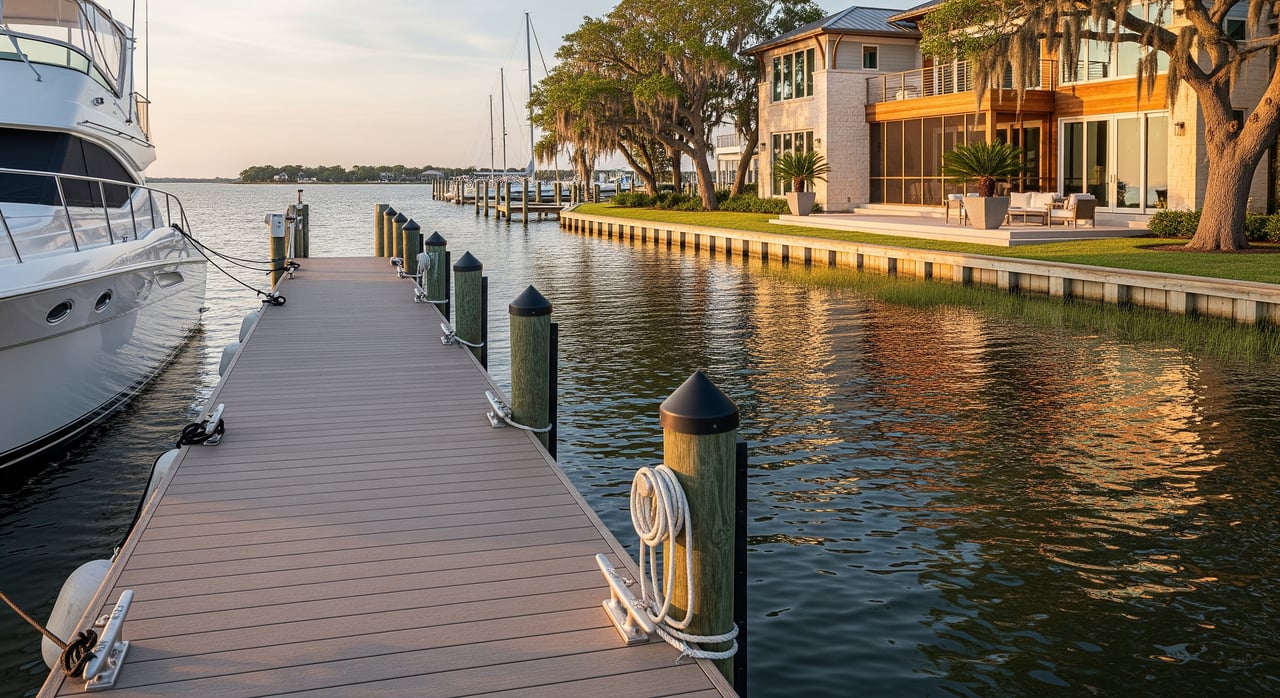
Call out what makes your property usable today: private pier, boat lift capacity, direct Taylor Lake or Clear Lake access, bulkheaded yard, and any permitted pier length. These details are often the first filter buyers use.
Arrange professional aerial drone photos, twilight dock shots, and a short video showing the approach from the water. Include a simple site sketch that shows lot lines, dock location, and any HOA easements. Guidance from regional marine specialists highlights how targeted visuals elevate waterfront listings, as shown in the Houston Docks tips.
Prepare a digital packet that includes your elevation certificate, any LOMA or LOMR, dock and bulkhead permits or GLO registration, recent dock and shoreline inspection reports, wind or flood insurance information, and your seller’s disclosure. The City notes that many elevation certificates are on file and available on request on its Flood Information page.
Saturate MLS waterfront fields, coordinate a broker open on a calm morning, and promote aerial video through paid social to reach boating and recreation audiences. Focus your copy on water depth, access points, and on-the-water lifestyle.
Exact costs are site-specific. Always get multiple bids in writing from licensed marine contractors.
You deserve a plan that fits Taylor Lake Village and the Clear Lake lifestyle. With hyperlocal waterfront expertise, polished digital marketing, and responsive, concierge-style service, Lori brings a practical, buyer-ready approach to your sale. That means guiding you on permits and disclosures, coordinating the right inspections, pricing with true waterfront comps, and delivering standout visuals that highlight your shoreline advantages. For select premium listings, she also leverages Coldwell Banker Global Luxury distribution to expand qualified reach.
When you are ready, let’s create your tailored selling strategy. Connect with Lori Vaughn to schedule your free consultation or request an instant home valuation.
Stay up to date on the latest real estate trends.

Waterfront Real Estate
Helping buyers and sellers understand waterfront value in Clear Lake and Nassau Bay
Trust her local insight and dedicated service to guide you through the Houston area real-estate market. With her expertise, personalized support, and commitment to your goals, you’re in excellent hands.