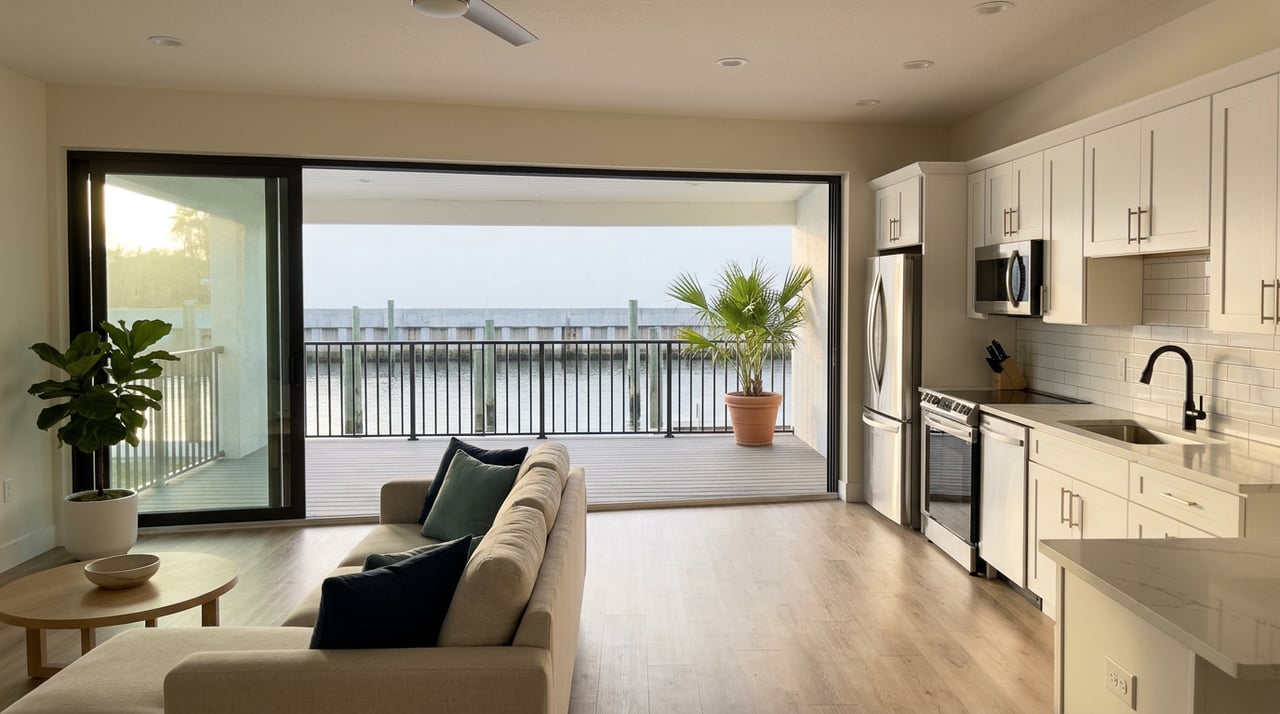
Downsizing To A Nassau Bay Waterfront Condo
March 5, 2026
March 5, 2026
What if your morning coffee came with sailboats gliding past your balcony and zero yard work on your to-do list? If you are ready to rightsize your life near the water, a Nassau Bay waterfront condo can deliver lake views and low-maintenance living. In this guide, you will learn what local condo options look like, how HOA and insurance work on the water, real monthly cost examples, and a simple checklist to buy with confidence. Let’s dive in.
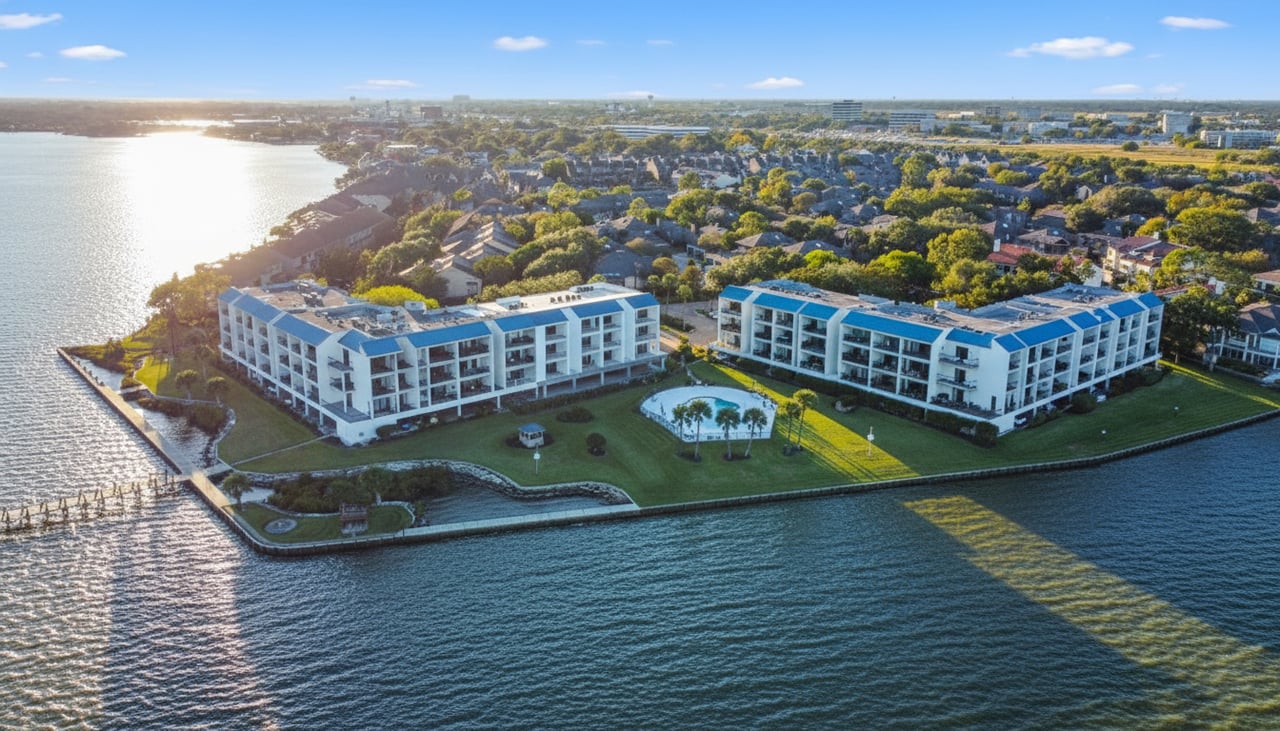
Nassau Bay sits on a peninsula along Clear Lake near NASA’s Johnson Space Center. It is a compact, water-surrounded community with boat activity, seasonal events, and easy access to waterfront dining. Kemah’s restaurants and the Kemah Boardwalk are a short drive away.
Inventory is small, so you will often see only a handful of condos or townhomes available at any time. The city also points residents to flood and emergency planning tools, which are smart to use for any waterfront address. You can find links to FEMA maps and local contacts on the City of Nassau Bay resources page.
You will find 1970s-era mid-rise buildings on or near Lakeside Lane with Clear Lake views. Typical floor plans include 1-bedroom units around 888 to 1,060 square feet and 2-bedroom units from about 1,000 to 1,600 plus square feet. Most offer balconies and shared amenities like a pool. HOA fees vary by building and unit size. Listings in the area show smaller waterfront condos with lower purchase prices but HOA fees that can range from the high hundreds to well over a thousand dollars for larger, amenity-heavy units.
These single-level plans often suit downsizers who want easier mobility. Elevators and entrances vary by building, so confirm access if stairs are a concern.
Attached townhome communities near the water offer 2 to 3 bedrooms, multiple levels, and often a garage. Some include deeded boat slips or access to a nearby marina. Association fees for these neighborhoods are generally lower than mid-rise buildings and commonly appear in the $300 to $500 per month range in recent listings. If you prefer more space or a slip, townhomes can be a fit, but the stairs may not work for every buyer.
Waterfront HOA services differ by community. Common inclusions are:
Exact inclusions vary. Confirm details in the association’s resale certificate, bylaws, and rules before you commit.
In Texas, condo associations must carry property insurance on common elements and general liability. The state statute that governs this is Texas Property Code §82.111. As a unit owner, you should also carry an HO-6 “walls-in” policy for your interior finishes, contents, and loss assessment coverage. National averages suggest many owners budget about 40 to 45 dollars per month for HO-6 coverage, though exact costs vary by address and coverage level. You can review typical HO-6 pricing ranges in this condo insurance cost overview.
Flood insurance is separate from standard hazard or wind coverage. To understand flood risk for a specific condo, check the FEMA Flood Map for the exact address and review city resources on the Nassau Bay flood and emergency page. Ask the seller or HOA for an Elevation Certificate if available. Local flood premiums vary by zone and elevation, and some Clear Lake addresses report average NFIP costs in the mid-700 dollars per year range. Get an address-specific quote early, and consider private market options. A quick primer is available here: Texas flood insurance overview.
Windstorm coverage can be different along the Gulf Coast. The Texas Windstorm Insurance Association functions as an insurer of last resort in many coastal zones, and eligibility can depend on the exact location. Confirm wind and hail coverage options for the specific address with your insurance agent.
Many Nassau Bay waterfront buildings date to the 1970s. That often means cyclical capital projects such as roof replacement, exterior paint or stucco work, elevator modernization, and bulkhead or sea wall repair. Always ask for the most recent reserve study and the last 2 to 3 years of budgets and board minutes. A clear, current reserve study helps you understand planned projects and the likelihood of special assessments. For background on what a reserve study covers and why percent-funded matters, see this reserve study explainer.
If the community has docks, boat lifts, or a marina, confirm whether slips are deeded or leased, current fees, any waitlist, and rules for guests and storage. For elevator buildings, review maintenance contracts and recent modernization or repair history.
Below are simplified examples to help you picture carrying costs. Numbers are illustrative and based on local context from recent listings and regional averages in the research. Always re-calculate with current HOA documents, insurer quotes, and tax rolls for a specific unit.
Illustrative subtotal excluding utilities: about $839 per month without flood, about $908 per month with flood.
Illustrative subtotal excluding utilities: about $1,292 per month before any flood policy, with some larger units carrying higher HOA fees.
Illustrative subtotal excluding utilities and major repairs: about $1,181 per month.
Condo living shifts roof, exterior, and often bulkhead or dock costs to the HOA, which simplifies your life. That convenience shows up as a monthly HOA fee that replaces many owner-paid maintenance tasks. Waterfront HOAs can be higher due to marina and bulkhead responsibilities, so compare the full picture for your short list.
Use this quick list to align the condo with your day-to-day life:
Request and review these items early, ideally before you make an offer or during your option period:
Resale certificate, declaration, bylaws, and rules. Texas law provides buyer protections and timelines for disclosures on condo resales. See the state’s condo resale framework in Texas Property Code Chapter 82.
Master insurance declarations. Confirm what the association policy covers and deductible amounts under Texas Property Code §82.111. Align your HO-6 and loss assessment coverage accordingly.
Budgets, reserve study, and board minutes. Ask for the most recent reserve study and the last 12 to 36 months of minutes to spot planned capital projects, elevator or bulkhead work, and any litigation or vendor issues. A solid reserve study reduces surprise assessments.
Flood and wind quotes. Check the address on the FEMA flood maps, request an Elevation Certificate if available, and get quotes for flood and wind coverage. The TWIA overview explains how wind coverage may work in some coastal zones.
Marina and dock rules. Confirm slip ownership or lease terms, fee schedules, waitlists, insurance rules, and guest policies.
Project eligibility for loans. Ask your lender to run project eligibility early. Owner-occupancy ratios, reserves, or pending litigation can affect loan choices and timelines.
If you want low-maintenance waterfront living with Clear Lake views and easy access to Kemah, a Nassau Bay condo could be your next smart move. When you are ready, connect with a local guide who knows the buildings, HOA budgets, and insurance details. Reach out to Lori Vaughn to schedule your free consultation and start your search with confidence.
Stay up to date on the latest real estate trends.

Waterfront Real Estate
Helping buyers and sellers understand waterfront value in Clear Lake and Nassau Bay
Trust her local insight and dedicated service to guide you through the Houston area real-estate market. With her expertise, personalized support, and commitment to your goals, you’re in excellent hands.