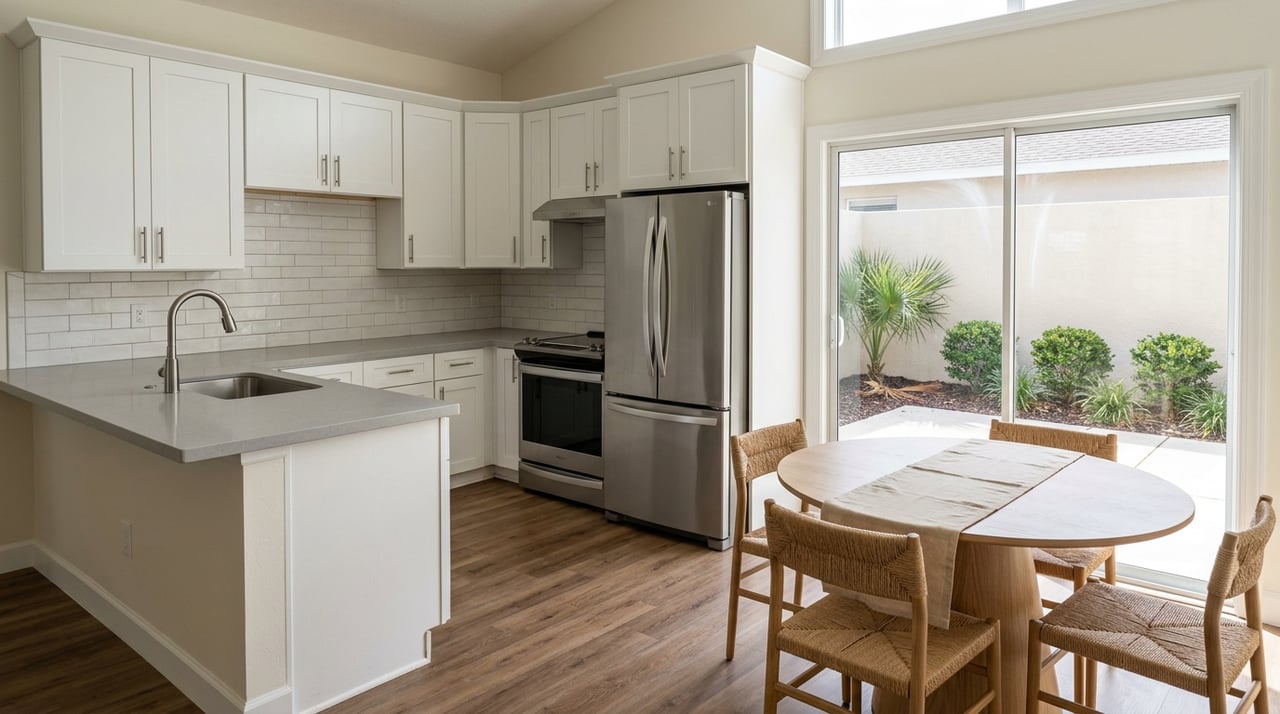
Buying Your Next Home While Selling In League City
July 2, 2026
July 2, 2026
Trying to buy your next home while selling your current one in League City can feel like a juggling act with real money on the line. You want the best timing, the right financing, and a move that does not leave you paying for two homes longer than necessary. The good news is that with a clear plan, you can line up both sides of the move with fewer surprises. Let’s dive in.
League City’s housing market appears mixed right now, but the pace is still quick enough that timing matters. Recent market snapshots place home prices in the low-to-mid $400,000s, with about 923 active listings and median days on market around 34 to 38 days.
That means you may not have endless time to make decisions once your current home hits the market. It also means your next purchase may require a strategy that accounts for offer timing, closing dates, and how quickly your current home is likely to attract attention.
Before you decide whether to buy first or sell first, you need a realistic picture of your budget. That includes your home equity, your expected sale proceeds, your monthly payment comfort zone, and the cash you may still need at closing.
In League City, property taxes should be part of that conversation from the start. The city’s tax breakdown shows that a homeowner’s annual bill is mainly split among Clear Creek ISD, the City of League City, and Galveston County, so your monthly cost can change meaningfully even if the new home price is only somewhat higher or lower.
For many homeowners, selling first is the simplest and least risky option. Once your sale closes, the proceeds can be used to pay off your existing mortgage and cover sale-related costs, which gives you a clearer picture of what you can put toward the next home.
This route can help you avoid carrying two mortgage payments at once. It is often a practical fit if keeping monthly expenses predictable is your top priority.
Selling first may work well if you want to:
The tradeoff is that you may need a short-term plan for where to live between closings. If your next home is not ready in time, temporary housing or a leaseback may help bridge the gap.
Buying first can be appealing if you want to secure the next home before listing your current one. This can be especially helpful if you have a specific type of property in mind and do not want to miss the right fit while waiting for your sale to close.
The challenge is affordability during the overlap. Your lender will need to evaluate whether you can handle the new home payment, your current home costs, any bridge debt, and your other financial obligations.
Homeowners sometimes use financing tools to access equity before their current home sells. These may include:
These options can create flexibility, but they also come with risk. Equity-based borrowing is secured by your home, so it should be treated as a planning tool, not a casual backup plan.
If you cannot buy your next home unless your current home sells and closes first, a sale contingency may be part of the solution. In Texas, the key form is the Addendum for Sale of Other Property by Buyer.
This type of addendum can give you a path forward without committing to a purchase you cannot complete. It can be useful when you want to make an offer while still protecting yourself from being stuck with two homes.
A contingency can help, but it does not remove all pressure from the process. Sellers may continue showing their property, and a kick-out clause may allow them to give you a deadline to remove the contingency if another offer comes in.
That is why timelines matter. Clear deadlines and realistic expectations can help both sides understand what happens next and reduce the chance of a deal falling apart over avoidable confusion.
Sometimes the cleanest solution is not a perfect closing match. It is a short bridge that gives you breathing room while one transaction finishes and the other catches up.
In Texas, temporary residential lease forms can help with this. A seller may stay in the home after closing under a Seller’s Temporary Residential Lease, or a buyer may move in before closing under a Buyer’s Temporary Residential Lease. These short-term forms are limited to no more than 90 days.
A leaseback can sound simple, but it is more than a handshake agreement. Occupancy after closing can affect insurance coverage, so it should be handled as both a contract and insurance issue.
If you are considering this option, the details matter. Move-out dates, rent terms, deposits, and insurance expectations should all be clear before closing.
When you are buying and selling at the same time, financing needs to be realistic, not theoretical. Meeting with a lender early helps you compare loan options and understand the difference between pre-qualification and pre-approval before you make an offer.
This matters because your lender is not only looking at the new home. They are also looking at how the overlap with your current home affects your debt, reserves, and timing.
If you lock your mortgage rate, that lock typically applies only for a specific period and only if your application does not materially change. If your buy-sell timeline slips, you could run into issues if the lock expires before closing.
You also need to budget for closing costs and cash to close on the new home, not just focus on expected sale proceeds. In many cases, the smartest move is to map out both closings side by side so you know what funds are arriving and what funds are still needed.
Texas uses specific forms that often come into play when you are buying and selling at once. If your purchase involves financing, the Third Party Financing Addendum is part of the picture.
If appraisal timing or value affects your comfort level, the Addendum Concerning Right to Terminate Due to Lender’s Appraisal may also matter. These are not minor details when you are coordinating two transactions at the same time.
A move-up or downsize decision is not only about sale price and mortgage payment. In League City, property taxes can materially affect your monthly carrying costs.
That is especially important when comparing a larger home, a smaller home, or a different neighborhood within the area. A home that looks manageable on list price alone may feel very different once taxes are factored into the monthly budget.
Texas school districts must provide a $140,000 residence homestead exemption, and the exemption is filed with the county appraisal district. If you buy after January 1 and qualify, you may receive the exemption for the applicable part of the tax year if the prior owner did not receive the same exemption.
For homeowners age 65 or older, and qualifying disabled homeowners, Galveston CAD notes that a school tax ceiling may be available and may be transferred to a new qualified Texas homestead when you move. That can make a big difference if you are downsizing and trying to estimate your future payment with confidence.
If you are feeling stuck, it helps to break the process into a simple sequence. Most successful buy-sell moves start with planning before any listing goes live.
A practical roadmap often looks like this:
This kind of preparation can help you move with less stress and fewer expensive surprises. It also gives you more confidence when it is time to make fast decisions.
Buying your next home while selling in League City is not just about finding a house and putting up a sign. It is about sequencing dates, understanding Texas forms, planning around taxes and financing, and creating enough flexibility to keep your move on track.
That is where local guidance can make a real difference. A knowledgeable agent can help you map the order of events, coordinate listing and offer timing, and structure a plan that supports your budget and your moving goals.
If you are thinking about making a move in League City, Lori Vaughn can help you build a smart, step-by-step plan for buying and selling with confidence.
Stay up to date on the latest real estate trends.




Trust her local insight and dedicated service to guide you through the Houston area real-estate market. With her expertise, personalized support, and commitment to your goals, you’re in excellent hands.